
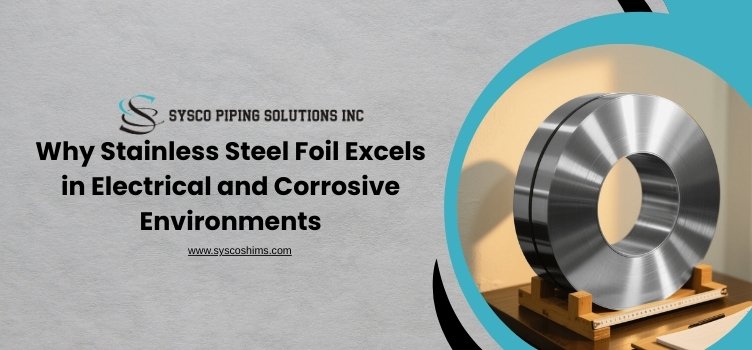
Industrial stainless steel foil, understanding of its role in the demand
In contemporary industrial projects, particularly those undertaken by large construction companies, architects, and engineering contractors, the choice of materials has a direct impact on safety, performance, and cost in the long run. The question that is always raised in the context of projects dealing with exposure to moisture, chemicals, heat, or electrical currents is: Why Stainless Steel Foil Excels in Electrical and Corrosive Environments? Stainless steel foil is unique since it is a mixture of corrosion, electrical, mechanical strength and durability in a thin, flexible foil.
Stainless steel foil, unlike other metals, is consistent in tough environments in which oxidation, rust, or conductivity can affect systems. Stainless steel foil provides a compromise in both protection and performance between electrical enclosures and shielding and construction elements subjected to coastal or chemical environments. This has made it a good selection in large-scale infrastructure, industrial plants and high-end building projects where reliability is not a bargaining point.
The reasons why Stainless Steel Foil is the best to use in electricity
Shielding Performance and Electrical Conductivity.
Stainless steel foil has found extensive application in electrical and electronic applications because of its regulated conductivity and shielding properties. Although it is not the main conductor like copper, it plays a very important supporting role.
Key advantages include:
- Proper shielding in electrical control systems and in panels of EMI and RFI.
- Good performance in a changing temperature environment.
- Less chance of sparking or material breakdown.
Stainless steel foil is used in electrical assemblies to shield sensitive components against electromagnetic interference to make the systems safer and more reliable.
Corrosion Resistance: One of the Reasons Stainless Steel Foil is a better option
Why Resistance to Corrosion is Important in Construction and Industry?
One of the most significant threats to the long-term structural and electrical performance is corrosion. Chromium is included in the stainless steel foil; it develops a passive oxide layer, which ensures the protection of the surface against both rust and chemical assault.
This makes it suitable for:
- Construction areas are located along the coastlines and in high-humidity areas.
- Chemical processing plants
- Industrial structures that are polluted.
As an architect or contractor, corrosion-resistant stainless steel foil will lower the costs of the lifecycle and enhance the safety margins.
Chemical Environment Effects: Performance
The foil made of stainless steel is superior in situations where it has to withstand acids, alkalis or industrial fumes.
Notable advantages:
- Crevice corrosion resistance.
- Extended service in severe conditions.
- Less destruction of surfaces with time.
Due to this reason, stainless steel foil is widely applied in refineries, wastewater treatment facilities and heavy construction projects in the industry.
Power, Elasticity and Accuracy in Stainless Steel Foil
A Thin Profile of High Strength
Stainless steel foil is quite thin, but it has considerable tensile strength. It is very useful in applications where there is a lack of space and durability is a must.
Applications include:
- Electrical assemblies, Gaskets and shims.
- Fireproofing of construction elements.
- Elaborated industrial components.
Custom Design Requirement Flexibility
Materials that can be used to accommodate complicated designs are often demanded by architects and engineers. The performance of the stainless steel foil can be cut, shaped and formed without performance loss.
This flexibility supports:
- In-house electrical enclosures.
- Modern buildings- architectural detailing.
- Niche industrial manufacture.
The Reason why Industry Leaders choose Stainless Steel Foil
Big construction companies and industrial powers are focused on the materials that can provide consistent performance. Stainless steel foil fulfils this expectation by exhibiting electrical compatibility as well as high corrosion-resistant abilities.
The major reasons why it is preferred are:
- Long-term reliability
- Adherence to industrial requirements.
- Lower replacement and maintenance expenses.
Stainless steel foil also provides uniform surface finish, thickness and mechanical characteristics when obtained through known manufacturers, which, with large-scale projects, is essential.
Conclusion
To sum up, we have discussed the reasons why stainless steel foil is so successful in electrical and corrosive conditions because of its electrical stability and corrosion resistance, thermal capabilities, and mechanical integrity. In electrical systems, industries and in the construction sector of industry, stainless steel foil is a reliable material. Its capability to work in severe environments and stay precise and durable makes it an invaluable option to architects, contractors, and construction executives working on high-priced projects.
FAQs
Q1. What are the reasons? and why stainless steel foil is used in electrical shielding applications?
Electrical shielding is done with stainless steel foil since it minimizes electromagnetic interference and remains stable at high temperatures and due to mechanical strain.
Q2. Can stainless steel foil be used in a corrosive industrial environment?
Yes, stainless steel foil has a great resistance to rust, chemicals and moisture, which means that it is applicable in the corrosive industrial and construction areas.
Q3. What is the advantage of stainless steel foil to a large construction project?
The stainless steel foil enhances the life of the product and minimizes the cost of maintenance and long-term operation of electrical and structural products.
Willing to improve the performance in electric and corrosive conditions? Select the best stainless steel foil with high quality that is durable and precise. Contact us now or send us an email at export@syscoshims.com
To negotiate your project needs and find a good supplier of stainless steel foil that can be used in your subsequent industrial or construction job.