
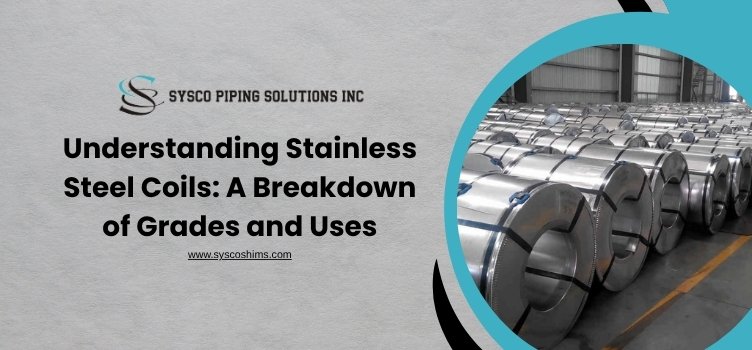
What Makes Stainless Steel Coils Essential Across Modern Applications?
In today’s fast-paced manufacturing environment, stainless steel coils have become essential for everything from commercial construction and automotive manufacturing to high-end architectural design. The widespread reliance on this material is what makes understanding stainless steel coils, their grades, and their industrial uses so important for engineers and procurement teams alike.
The appeal of stainless steel coil stock lies in its durability, corrosion resistance, and ability to adapt to a range of fabrication requirements. Manufacturers create these components by rolling stainless steel sheets into continuous coils. This format allows for easier transport, efficient continuous processing, and bulk material usage. For industrial manufacturers, sourcing high-quality coils matters because it helps streamline production lines, reduce material waste, and maintain consistent structural performance across applications.
Types of Stainless Steel Coils Used Across Heavy Industries
The mechanical performance and surface finish of a coil are largely determined by the manufacturing process used to create it. Here are four primary categories of stainless steel coil available on the market:
1. Hot Rolled Stainless Steel Coil
- Manufacturing Process: Produced at high temperatures, often exceeding 1,700°F.
- Workability: Offers smoother fabrication and easier forming.
- Ideal Applications: Well suited for hidden structural elements and heavy industrial components where a pristine surface finish isn’t the priority.
2. Cold Rolled Stainless Steel Coil
- Manufacturing Process: Further processed at room temperature after initial hot rolling to achieve tighter tolerances and finer surface finishes.
- Workability: Known for greater tensile strength and a smooth, aesthetically pleasing surface.
- Ideal Applications: Commonly used in home appliances, visible building facades, and automotive body parts.
3. Polished Stainless Steel Coil
- Manufacturing Process: Treated with specialized abrasives to create a reflective surface.
- Workability: Valued in industries where surface appearance and hygiene matter most.
- Ideal Applications: Used in interior decor, commercial kitchen equipment, and applications requiring easy sanitation.
4. Edge-Finished Stainless Steel Coil
- Manufacturing Process: The raw, sharp slit edges are rolled or conditioned to be smooth.
- Workability: Reduces workplace injury risk and improves handling safety during manufacturing.
- Ideal Applications: Common in electronic housings, consumer goods, and precision mechanical engineering.
The Most Popular Grades of Stainless Steel Coil
Different industrial environments call for different metallurgical properties. Selecting the right grade depends on the required corrosion resistance, tensile strength, and workability.
Grade 304 Stainless Steel Coil
- Overview: The most widely used and versatile austenitic stainless steel.
- Key Properties: Strong corrosion resistance in standard environments and good deep-drawing qualities.
- Best Uses: Food and beverage processing equipment, chemical storage, and general architectural metalwork.
Grade 316 Stainless Steel Coil
- Overview: The second most common grade, with an added dose of molybdenum.
- Key Properties: The molybdenum improves resistance to pitting and crevice corrosion in harsh, chloride-rich environments.
- Best Uses: Marine hardware, offshore oil rigs, chemical processing plants, and coastal applications.
Grade 410 & 430 Stainless Steel Coil
- Overview: Ferritic and martensitic grades known for specific mechanical advantages rather than maximum corrosion resistance.
- Key Properties: Good heat resistance, solid thermal conductivity, and strong mechanical properties at a lower price point.
- Best Uses: Automotive exhaust systems, industrial machinery, and industrial hand tools.
Duplex Stainless Steel Coil
- Overview: A hybrid alloy combining austenitic and ferritic stainless steel properties.
- Key Properties: Higher yield strength, nearly twice that of standard Grade 304, and strong resistance to stress-corrosion cracking.
- Best Uses: Oil and gas exploration, desalination plants, and heavy engineering infrastructure.
If you are evaluating material options for an upcoming project, it helps to understand how these coils compare to other stainless steel formats. Read our detailed comparisons on Coil vs. Foil and Coil vs. Strip, which outline thickness, structural strength, and application differences.
Key Applications of Stainless Steel Coils in Modern Industries
Because of its long-term reliability and appearance, stainless steel remains a preferred choice for engineers, commercial contractors, and architects.
Major Industrial Applications
- Building & Infrastructure: Used in weather-resistant roofing sheets, cladding, elevator paneling, handrails, and building facades.
- Automotive Industry: Used in exhaust systems, decorative trims, engine parts, and structural chassis components.
- Heavy Industrial Machinery: Used in conveyor belts, pressure vessels, chemical processing equipment, and heat exchangers.
- Architecture & Interior Design: Used in interior decoration, structural partitions, commercial kitchen fittings, and stair railings.
- Food & Pharmaceutical Processing: The non-porous surface supports hygiene, corrosion resistance, and easy sterilization.
Core Benefits at a Glance
- Long operational lifespan, often measured in decades.
- 100% recyclable, making it an environmentally friendly material.
- Good heat resistance and fire safety properties.
- A favorable strength-to-weight ratio.
- Lower long-term maintenance and replacement costs.
Conclusion
A thorough understanding of stainless steel coils, including their manufacturing types, metallurgical grades, and industrial uses, helps companies in construction, precision engineering, and automotive sectors make sound structural decisions. Knowing how different coils perform under stress, which environments they suit, and the long-term value they offer is central to successful procurement.
As a durable, corrosion-resistant, and versatile material, stainless steel coil remains one of the most reliable materials in modern production and commercial construction.
FAQs
Q1: Which is the most appropriate stainless steel grade for coils in a highly corrosive marine environment?
Grade 316 stainless steel is generally considered the best option for marine or high-chloride environments. The added molybdenum gives it notably better resistance to pitting and structural corrosion compared to standard grades.
Q2: Should my manufacturing facility use hot rolled or cold rolled stainless steel coils?
This depends on your end product. Hot rolled coils are generally preferred for heavy structural engineering and industrial work where aesthetics don’t matter. Cold rolled coils are the better choice for consumer industries where a tight-tolerance, aesthetic surface finish matters, such as in home appliances.
Q3: What are the largest industries utilizing stainless steel coil stock today?
The primary consumers of stainless steel coils include large-scale commercial construction, automotive manufacturing (particularly exhaust and structural systems), pharmaceutical development, heavy chemical processing, and architectural design.
Need help selecting the right industrial materials? Contact our engineering team today for guidance on material options and supply chain solutions tailored to your manufacturing needs. Reach out directly at export@syscoshims.com for inquiries or bulk quotations.