
What Is a Sealing Washer and Why Are They Essential?
Anyone who has ever had to deal with a sudden leak in a pipeline, faucet, or high-pressure industrial fitting knows how frustrating and costly fluid loss can be. Achieving a perfectly sealed joint often relies on one of the smallest and most frequently overlooked components in engineering: the sealing washer. Sysco Shims specializes in precision-engineered washers, and understanding how a sealing washer fits into that broader family helps you choose the right component for the job. The phrase “the small part that stops big leaks” perfectly captures the value of this tiny hardware component. By forming a tight barrier between two mating surfaces, industrial sealing washers prevent fluid or gas leakage and secure critical connections in everything from home plumbing to heavy-duty hydraulic machinery.
In this comprehensive guide, we will explore exactly what a sealing washer is, how it functions under extreme pressure, and why selecting the right material is vital for dependable long-term performance. If you want to learn more about similar components, check out our guide on the types of industrial washers.
Why High-Quality Sealing Washers Matter in Every Connection
At first glance, it might look like just a simple metal or rubber ring, but a high-quality sealing washer has a vital job: preventing catastrophic system leaks. When properly installed, it creates a watertight and airtight joint between two surfaces, guaranteeing that high-pressure fluids or volatile gases cannot escape through microscopic thread openings or surface imperfections.
Whether utilized in residential plumbing, high-performance automotive engines, or massive industrial manufacturing systems, these precision-engineered washers are critical for maintaining system pressure and structural integrity over time.
Key Benefits of Using Premium Sealing Washers:
- Leakage Prevention: Offers an impenetrable barrier against high-pressure leaks and seepage.
- Vibration Absorption: Acts as a shock absorber to minimize wear and tear from mechanical vibration.
- Increased Lifespan: Extends the expected life cycle of expensive pipelines, fittings, and mechanical joints.
- Consistent Tension: Ensures that bolts, nuts, and fasteners remain securely tightened even under heavy mechanical load.
How Exactly Does a Sealing Washer Work?
The mechanics of a sealing washer are remarkably simple yet highly effective. As you tighten a bolt, nut, or specialized fitting, the washer is squeezed aggressively between the two hard mating surfaces. This extreme compression forces the washer to deform slightly, depending on its material, filling in microscopic scratches, cracks, and gaps that would otherwise allow fluids or gases to be leached out of the system.
Common Materials Used in Sealing Washer Manufacturing:
- Copper Washers: Unmatched for high-temperature and high-pressure applications where heat resistance is critical.
- Aluminum Washers: Extremely lightweight and naturally resistant to rust and corrosion.
- Rubber Washers (NBR/EPDM): Highly flexible and perfectly suited for creating watertight seals in plumbing and gas distribution networks.
- Fiber or PTFE Washers: Engineered specifically for aggressive environments requiring robust chemical resistance.
Every material is carefully selected based on the specific environmental conditions it will face, including extreme heat, massive pressure variations, and exposure to corrosive industrial chemicals.
Distinct Types of Industrial Sealing Washers
Selecting the exact type of sealing washer is entirely dependent on your application’s specific industrial requirements. Some of the most frequently utilized variations include:
- Metal Sealing Washers: Built to withstand punishing environments, these are heavily used in high-pressure hydraulic and pneumatic systems where standard rubber would blow out.
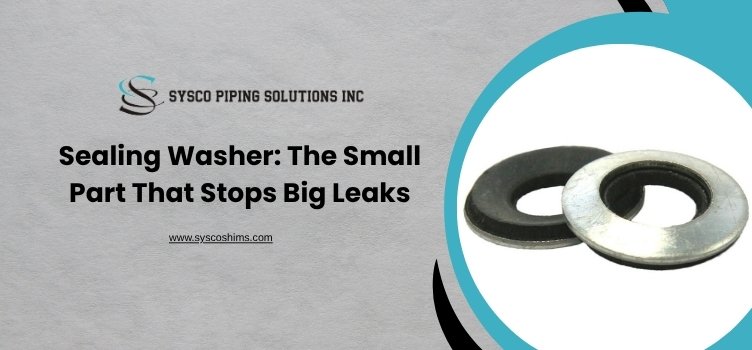
- Rubber Bonded Washers (Dowty Washers): A hybrid design featuring a metal outer ring bonded to an inner rubber seal, ideal for absorbing intense vibration while simultaneously acting as a reliable watertight seal.
- Copper Sealing Washers: Malleable yet extremely strong, these are the industry standard for brake lines, fuel systems, and heavy-duty plumbing infrastructure.
- Fiber Washers: Non-conductive and compressible, these are ideal for low-pressure environments, chemical processing lines, and electrical applications.
Why Choosing the Right Sealing Washer Is Crucial for Safety
Choosing the incorrect washer material or size can lead to disastrous consequences, including immediate system blowouts, slow and corrosive water leakage, or unnecessary maintenance expenses. Utilizing the right custom sealing washer:
- Equalizes and withstands both operating pressure and extreme temperature fluctuations.
- Provides superior recovery against aggressive chemical activity and metal corrosion.
- Fits perfectly to allow for uniform load distribution across the fastener, preventing the bolt head from cracking the surface.
In high-stakes industries like automotive manufacturing, chemical refinement, and commercial plumbing, even a small, seemingly insignificant leak can result in massive operational downtime or severe safety hazards. Premium sealing washers act as the ultimate fail-safe for system reliability.
Common Applications of Sealing Washers
Because of their adaptability and low cost, sealing washers are universally utilized across diverse industrial applications, including:
- Plumbing Systems: Sealing joints in pressurized water pipes, faucets, and critical flow valves.
- HVAC Systems: Providing an airtight seal to prevent the escape of expensive environmental refrigerants.
- Automotive & Aerospace: Securing oil drain plugs, fuel lines, transmission housings, and hydraulic brake systems.
- Heavy Machinery Industry: Connecting pressure fittings, high-volume gas pipelines, and manufacturing robotics.
Despite being one of the most cost-effective hardware solutions on the market, their versatility makes them irreplaceable.
How to Install a Sealing Washer Properly for Maximum Efficiency
Even the best washer will fail if installed incorrectly. Follow these steps to guarantee a secure, long-lasting installation:
- Thoroughly clean both mating surfaces, removing any lingering dirt, old sealant, rust, or oil.
- Carefully select the correct washer size (inner and outer diameter) and material for the specific application.
- Position the sealing washer flatly and evenly between the two mating surfaces.
- Tighten the fastener to the manufacturer’s recommended torque specifications. Over-tightening can crush, break, or extrude the washer, rendering it useless.
- Conduct a leak test under full operating pressure before concluding the job.
This process, straightforward as it is, guarantees a safe, tight, and permanent seal.
Conclusion
A sealing washer may be a small, inexpensive component, but it genuinely sits at the frontline of leak prevention. Whether installed under a kitchen sink or inside a heavy-duty industrial hydraulic press, its role in ensuring leak-free performance and connection reliability cannot be overstated. By investing in the right material and installing it correctly, you can avoid costly water damage and systemic breakdowns.
FAQs
Q1. What is the primary purpose of a sealing washer?
The primary purpose of a sealing washer is to provide a tight, leak-proof closure between two separate surfaces, ensuring liquids or gases do not escape the system. By compressing under the fastener, it also spreads pressure evenly to cushion the joint and prevent physical damage to the materials being bolted together.
Q2. Can a sealing washer be reused after it has been removed?
In the vast majority of cases, it should not be reused. Once a sealing washer is compressed during installation, it loses its elasticity and structural integrity. A reused washer will rarely seat properly the second time, resulting in almost guaranteed leaks. It is recommended to replace it during any routine maintenance.
Q3. What is the best material to use for a sealing washer?
The best material is entirely application-dependent. For instance, copper and aluminum washers are exceptional for high-temperature and high-pressure fluid systems, like automotive engines. Conversely, rubber (EPDM/NBR) and fiber washers are specifically suited for low-pressure water pipes, HVAC lines, and chemical distribution systems.
Have highly specific questions or need more information about acquiring premium sealing washers, shims, and precision fittings? We’re here to help you get the exact hardware you need. Email our industrial experts today at export@syscoshims.com or contact us directly for a quote.