
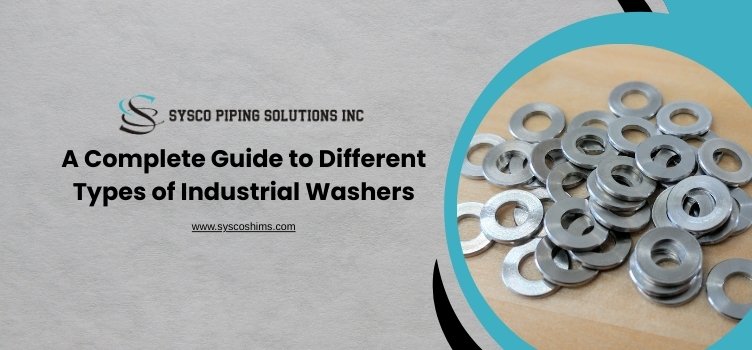
Understanding the Vital Role of Industrial Washers in Modern Engineering
While an industrial washer might look like a simple piece of miniature hardware, its impact on the safety, structural integrity, and long-term durability of heavy machinery and construction systems is significant. A high-quality washer is an essential fastening component designed to distribute the physical load of a threaded fastener, such as a bolt or nut, prevent surface damage, and counteract mechanical vibration.
Similar to how material strength defines the value of stainless steel, as explored in our guide on understanding stainless steel coils, the specific design and metallurgy of a washer determine its reliability in high-stakes manufacturing. From automotive assembly lines and aerospace engineering to oil and gas infrastructure, choosing the right industrial washer helps frameworks hold together safely under pressure over time. Standards bodies such as ASTM International publish the dimensional and material specifications that most industrial washer types are manufactured against, which is worth checking before finalizing a spec.
1. Flat Washers: The Foundation of Industrial Load Distribution
Flat washers are the most common and versatile type of washer used in commercial and industrial fastening applications. Their primary purpose is to provide a smooth, dependable bearing surface that protects the mating material.
Why Heavy-Duty Flat Washers Are Critical
- Load Distribution: Evenly divides the weight and pressure of a tightened threaded clamp, preventing surface cracking.
- Surface Protection: Keeps the twisting motion of the nut or bolt head from digging into or gouging the underlying metal.
- Reliable Stability: Ensures stable, uniform tightening across sensitive industrial machinery components.
You can find flat washers in virtually every sector, including heavy equipment installation, commercial construction, and structural frames.
2. Spring Washers: The Ultimate Solution for Vibration Resistance
In environments where constant mechanical movement, extreme vibration, or thermal expansion threaten to loosen standard fasteners, spring washers are the standard engineering solution.
Key Advantages of Spring Washers
- Vibration Control: Prevents bolts from backing out or loosening due to kinetic motion.
- Continuous Tension: Acts like a loaded spring to maintain consistent clamping force even if the joint shifts slightly.
- Thermal Adaptability: Helps the assembly resist loosening during temperature fluctuations.
Automobile manufacturing, heavy railway engineering, and mechanized robotics rely on precisely engineered spring washers, such as Belleville washers or wave washers, for long-term reliability.
3. Lock Washers: Ensuring Secure and Permanent Fastening
When a joint cannot afford to fail, lock washers are used to increase the friction of the locking mechanism. These washers bite into the metal to inhibit loosening in assemblies that undergo severe torque or shear force.
Common Types of Lock Washers
- Split Ring Lock Washers: Feature a cut that creates tension, pushing the sharp edges into the bolt and mounting surface.
- Internal Tooth Lock Washers: Designed with inward-facing teeth to grip the fastener head tightly.
- External Tooth Lock Washers: Feature outward-facing teeth for stability on larger surface areas.
These washers are commonly specified in turbines, electric motors, oil rig equipment, and heavy-duty steel frames.
4. Structural Washers: Built for High-Strength Infrastructure Projects
Standard hardware-store washers will fail under the weight of commercial infrastructure. Structural washers are heavy, thick, and heat-treated specifically for load-bearing construction work, such as steel bridges and skyscrapers.
Significant Features of Structural Washers
- High-Load Design: Forged thick enough to withstand tons of pressure without deforming.
- Strict Compliance: Manufactured to meet civil engineering requirements, such as ASTM F436.
- Bolt Compatibility: Fitted onto specialized structural bolts anchoring large I-beams.
5. Sealing Washers: Engineered for Complete Leak Prevention
As covered in our related guide, Sealing Washers: The Small Part That Stops Big Leaks, these hardware pieces often feature metal-reinforced rubber or neoprene designed to prevent the escape of liquids and pressurized gases.
Industrial Benefits of Sealing Washers
- Impenetrable Joints: Provide watertight and airtight seals for high-stakes plumbing.
- Corrosion Elimination: Prevent corrosive moisture from entering the threads of the fastened joint.
- Pipeline Integrity: Support long-term safety and flow integrity in gas pipelines.
6. Fender Washers: Designed for Maximized Bearing Surfaces
Fender washers have a large outer diameter relative to their inner hole size, offering wide surface coverage.
Where Fender Washers Are Heavily Used
- Automotive Body Assemblies: Originally used on car fenders, hence the name.
- Sheet Metal Work: Spreading the load across thin, fragile sheet metals to prevent tear-out.
- Electrical Panels & Enclosures: Mounting heavy components securely without warping the housing.
How to Choose the Right Industrial Washer
Selecting the correct washer type comes down to three questions: what load is it carrying, what environmental stress will it face (vibration, moisture, temperature swings), and what standard does the application call for. A flat washer solves a load-distribution problem, a spring or lock washer solves a vibration problem, a sealing washer solves a leak problem, and a structural washer solves a heavy-infrastructure compliance problem. Cross-checking the relevant ISO or ASTM specification for your application before finalizing a part number is good practice, since washer dimensions and load ratings are rarely interchangeable across standards.
Conclusion
Throughout this guide, we have examined the six major categories of industrial washers: flat, spring, lock, structural, sealing, and fender washers. Each type serves a specific engineering purpose, from load distribution and vibration resistance to sealing and bearing-surface coverage. A clear understanding of these fasteners helps commercial construction experts, architects, and industrial procurement leaders select the right components for safe, long-term performance.
FAQs
Q1. Which industrial washers are most suitable for high-vibration environments?
Spring washers, particularly split-lock and Belleville washers, are highly appropriate for extreme high-vibration applications. By maintaining continuous spring-like tension on the fastener, they prevent bolts from backing out, making them mandatory for automotive manufacturing and vibrating heavy industrial machinery.
Q2. What type of industrial washer is used to prevent systemic fluid leakage?
A sealing washer, often called a bonded gasket washer, is explicitly employed to avoid fluid and gas leakage in pressurized systems. These washers combine a durable metal outer ring with a compressible rubber or neoprene inner ring to create a watertight seal under intense pressure.
Q3. Which type of washer is required for heavy civil construction projects?
For large-scale, load-bearing commercial projects like steel skyscrapers and bridges, heavy-duty structural washers are explicitly required. These are significantly thicker than standard washers and are heat-treated to meet rigorous engineering standards, such as ASTM F436, to prevent steel beams from warping under immense weight and torque.
Ready to Strengthen Your Industrial Fastening Systems?
Get high-performance hardware solutions tailored to your project’s engineering needs. Contact us today or email our experts directly at export@syscoshims.com to upgrade your manufacturing reliability with premium industrial fasteners and customized shims.