
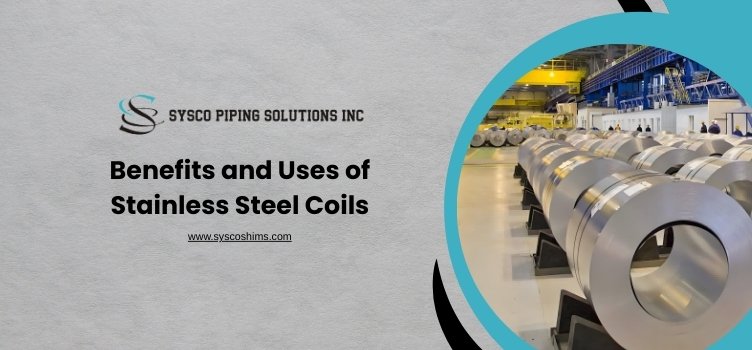
Why Stainless Steel Coils Matter in Manufacturing and Construction
Stainless steel coils are a foundational material across modern industrial and commercial construction. From infrastructure pipelines to precision aerospace components, understanding the benefits of using stainless steel coils matters for engineering teams choosing between material options. High-rise buildings, heavy manufacturing equipment, and architectural designs all rely on the strength and service life that coiled stainless steel provides, and that reliability is backed by recognised standards such as ASTM A240 for stainless steel plate, sheet, and strip.
When construction managers, structural architects, and contractors ask why stainless steel coil is worth specifying over alternatives, the answer usually comes down to three factors: tensile strength, corrosion resistance, and fabrication flexibility. Rolling high-grade stainless steel sheet into coils also makes the material easier to transport and feed continuously through production lines, which is one reason it’s a common choice for demanding environments where structural integrity and lifecycle cost both matter. For shim-grade applications where alignment tolerance is the priority rather than volume production, see our guide on why shims are critical in heavy engineering.
What Are Stainless Steel Coils?
Stainless steel coils are made by rolling cast slabs of raw stainless steel, under heat and pressure, into continuous thin sheets that are then wound into coils. They’re produced across a range of metallurgical grades, gauges (thicknesses), and surface finishes to match specific industrial requirements.
Key Features of Stainless Steel Coils
- High Tensile Strength: Handles significant mechanical load without warping.
- Corrosion Resistance: Performs well in chemical or high-heat environments, depending on grade.
- Consistent Surface Finish: Available in matte, brushed, or mirror-polished options.
- Long Service Life: Typically outperforms carbon steel in corrosive or high-wear conditions.
The Primary Advantages of Stainless Steel Coils
1. Corrosion Resistance
One of the main advantages of stainless steel coils is their resistance to rust and corrosion. Chromium content forms a thin, self-repairing oxide layer on the surface, which makes the material well suited for:
- Humid or coastal environments
- Chemical processing plants and refineries
- Water treatment and desalination facilities
For architects and contractors, this generally translates into lower maintenance costs and a longer service life for the structure.
2. Strength-to-Weight Ratio
Stainless steel coils offer solid structural strength without adding excessive weight, which matters for:
- Structural frameworks
- Architectural cladding and industrial roofing
- Manufacturing equipment and robotics
Because the material resists impact and physical stress well, it supports reliability in infrastructure exposed to severe weather or heavy load-bearing use.
3. Long-Term Cost-Effectiveness
Initial procurement cost is usually higher than carbon steel, but stainless steel coils tend to be more cost-effective over the full lifecycle because they typically require:
- Little to no repainting or ongoing maintenance
- Less frequent replacement
- High recyclability at end of life
Over large commercial or civic projects, this often results in a better return on investment and lower long-term liability.
Applications of Stainless Steel Coils in Industry
Construction and Architectural Applications
- Wall paneling and commercial roofing
- Structural supports, brackets, and load-bearing beams
- Building facades, elevators, and stair railings
Industrial Manufacturing and Fabrication
Stainless steel coil stock is commonly stamped, cut, or welded into:
- Sanitary pipes and transport tubes
- Automotive exhaust systems and chassis components
- Chemical storage tanks and pressure vessels
Civic Infrastructure and Heavy Engineering
- Bridges and highway flyovers
- Power plant components
- Metro and rail infrastructure
These are typically high-stress, long-service-life applications where the material’s resistance to environmental degradation is the deciding factor.
Choosing Grade and Finish
- Metallurgical Grade: Selected based on required corrosion resistance and tensile strength, Grade 304 for general use, Grade 316 for higher chloride or marine exposure.
- Dimensional Specifications: Thickness (gauge) and width, matched to the stamping or roll-forming equipment being used.
- Surface Finish: Chosen for sanitary requirements (e.g. food processing) or for visual/architectural purposes.
- Supplier Verification: Confirm ISO-compliant manufacturing and consistent quality assurance before committing to a supplier.
Sustainability
Stainless steel is highly recyclable without losing its structural properties, which makes stainless steel coils a reasonable fit for sustainability-focused construction. Recyclable, low-maintenance materials are increasingly expected in green building practices, including LEED certification requirements.
Conclusion
Stainless steel coils combine structural strength, corrosion resistance, and design flexibility, which is why they show up across manufacturing, commercial construction, and infrastructure projects. Matching the right grade, gauge, and finish to your application, and verifying it against a recognised standard like ASTM A240, is the difference between a spec that performs and one that needs revisiting mid-project.
FAQs
Q1. What are the major long-term benefits of using stainless steel coils in construction?
Stainless steel coils resist corrosion, offer high tensile strength, need minimal maintenance, and remain cost-effective over the long term, making them a strong choice for large-scale commercial construction and civic projects.
Q2. Why is coiled stainless steel well suited to industrial manufacturing?
Coiled steel can be fed continuously into stamping and roll-forming machines, which improves efficiency in mass production. The material also holds up in high-pressure environments, making it suitable for sanitary pipes, chemical tanks, and heavy machinery components.
Q3. What are the environmental advantages of stainless steel coils for green buildings?
Stainless steel coils are highly recyclable and have a long operational lifecycle, which reduces landfill waste and material replacement over time, supporting green building goals such as LEED certification.
Need help specifying the right stainless steel coil for your next project? Contact our team or email our engineering experts at export@syscoshims.com to discuss grade, gauge, and finish for your application.