
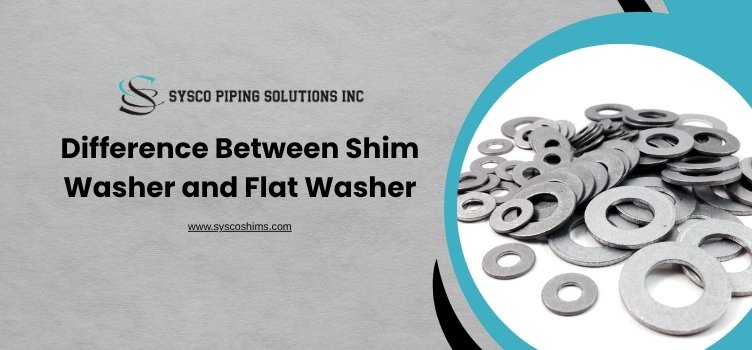
What Is the Difference Between a Shim Washer and a Flat Washer?
Shim washer and flat washer look similar at first glance, but they solve different problems in an assembly. A shim washer is built for precise alignment and micro-level spacing, while a flat washer is built to spread load and protect a surface under a bolt or screw. Picking the wrong one can throw off tolerance, cause premature wear, or leave a fastener loose over time. Whether you are an engineer, a manufacturer, or a maintenance technician, knowing which washer fits your application matters for the long-term stability of the assembly.
What Is a Shim Washer?
A shim washer is a precisely machined, thin component used to correct tolerances, fill small gaps, and achieve exact spacing between machine parts. It is common in automotive, aerospace, heavy equipment, and general manufacturing work where even a fraction of a millimeter of misalignment can affect performance.
Key Features of Shim Washers
- Available in precise thicknesses down to as fine as 0.05 mm.
- Manufactured in stainless steel, brass, and copper.
- Used to fine-tune positioning and hold exact spacing between components.
- Resistant to wear, corrosion, and vibration over repeated use.
In simple terms, a shim washer is a correction tool. It compensates for small manufacturing tolerances and keeps mechanical parts aligned exactly where they need to be.
What Is a Flat Washer?
A flat washer is a thin, flat, circular plate with a center hole, used to distribute the load of a bolt or screw across a wider surface area. It also protects the material underneath from surface damage and helps keep the connection from loosening under vibration.
Key Features of Flat Washers
- Typically made from stainless steel, carbon steel, or nylon.
- Sits under a bolt or nut head to reduce friction and surface wear.
- Protects the mounting surface from damage caused by direct fastener pressure.
- Helps maintain a secure connection and resist loosening over time.
Flat washers show up in almost every kind of assembly work, from household furniture to heavy industrial machinery, because the fastening job they do is so universal.
Shim Washer vs Flat Washer: Quick Comparison
Here is a side-by-side look at how a shim washer and a flat washer differ in design, function, and use case.
| Parameter | Shim Washer | Flat Washer |
|---|---|---|
| Purpose | Precise alignment, spacing, and tolerance correction | Load distribution and surface protection |
| Thickness | Very thin, available in micro-level measurements | Fixed thickness, not typically customizable |
| Precision | High-precision tolerance correction | General-purpose, moderate precision |
| Applications | Machinery, tool setups, engineering, automotive | Construction, general fastening, furniture |
| Cost | Higher, reflecting manufacturing precision | Lower and widely available |
| Customization | Custom sizes and materials on request | Usually sold in standardized sizes |
When to Use a Shim Washer
Reach for a shim washer whenever the job calls for accurate alignment or fine spacing rather than simple fastening. Common situations include:
- Correcting the fit between two components that must sit flush or tightly aligned.
- Reducing vibration and wear in rotating or moving assemblies.
- Fine-tuning calibration in high-frequency or high-precision equipment.
- Manufacturing precision tools, motors, or gear assemblies.
A good example is gear assembly, where shim washers keep gears and shafts perfectly aligned so the mechanism runs without unnecessary friction or inefficiency.
When to Use a Flat Washer
A flat washer makes more sense when the goal is straightforward fastening rather than precision correction. Typical cases include:
- Spreading the clamping force of a bolt or screw across a wider surface area.
- Protecting softer materials, like wood or thin metal sheeting, from surface damage.
- General assembly work where budget and availability matter more than micro-tolerance.
- Preventing a fastener from digging into or marking the mounting surface.
How to Choose Between a Shim Washer and a Flat Washer
- Precision needs: If the application requires micro-level accuracy, a shim washer is the right call.
- Budget: Flat washers are more cost-effective and suit simple, high-volume fastening.
- Application type: Use shim washers for alignment and tolerance correction, and flat washers for load distribution.
- Material requirements: Both are available in stainless steel and brass, so the choice often comes down to the corrosion resistance the environment demands.
For precision engineering, a shim washer is almost always the better fit. For general mechanical fastening, a standard flat washer does the job without the added cost.
Common Materials Used in Shim and Flat Washers
Both washer types can be sourced in different materials depending on the environment and load the assembly will face:
- Stainless steel: Strong corrosion resistance for demanding conditions.
- Brass: Good electrical conductivity and a clean finish.
- Carbon steel: Built for heavy-duty structural work.
- Aluminum: Lightweight with natural corrosion resistance.
Sysco Shims, a shim manufacturer based in India, supplies precision-engineered shim washers across these material grades for engineering and industrial applications. For standard flat washers outside the precision shim category, most local fastener suppliers carry them off the shelf.
Shim Washer and Flat Washer Applications
Shim Washer Applications
- Gearboxes and motor vehicle transmissions
- Balancing and leveling industrial equipment
- Aerospace components
- Tool and die setups
Flat Washer Applications
- Structural and construction assemblies
- General mechanical fastening
- Furniture fittings
- Everyday hardware and DIY projects
Conclusion
Understanding the difference between a shim washer and a flat washer comes down to one question: does the job need precise alignment, or does it need load distribution and surface protection? A shim washer earns its place in high-tolerance mechanical and engineering work, while a flat washer handles general-purpose fastening reliably and affordably. Knowing which one your project calls for helps you avoid misalignment, premature wear, and unnecessary rework down the line.
FAQs
Q1: Can a flat washer be used in place of a shim washer?
Not reliably. A flat washer is designed for load distribution, not precision spacing, so it cannot correct fine tolerances the way a shim washer can. Using one in place of the other can leave components misaligned.
Q2: What thickness do shim washers typically come in?
Shim washers are available in very fine increments, often starting as thin as 0.05 mm, which allows for exact tolerance correction in precision assemblies like gearboxes and motors.
Q3: Are shim washers more expensive than flat washers?
Generally yes. Shim washers cost more because of the manufacturing precision involved, while flat washers are mass-produced in standard sizes and priced accordingly.
Looking for a reliable shim manufacturer in India for your next project? Contact Sysco Shims or email export@syscoshims.com to discuss precision shim washers built to your exact specifications.