
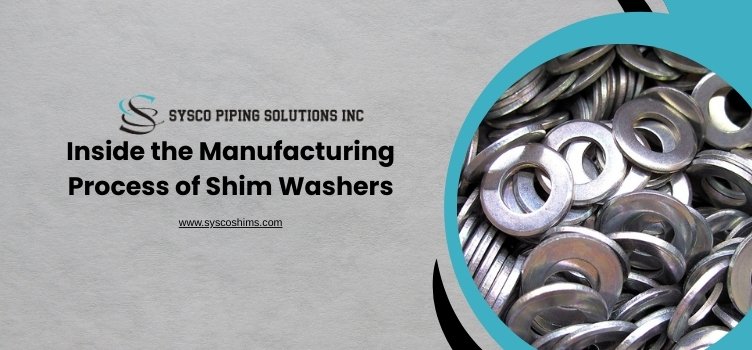
Manufacturing Process of Shim Washers: The Short Answer
The manufacturing process of shim washers has seven main stages: material selection, cutting and blanking, stamping, heat treatment where needed, surface finishing, quality inspection and packaging. Each stage protects the same two things: a tightly controlled thickness, and clean, flat, burr-free washers.
Shim washers are thin washers used to adjust spacing, take up clearance and set alignment in machinery and assemblies. Because they are so thin, a small error in thickness or flatness shows up directly in the finished assembly. This guide walks through each stage so engineers and buyers know what to ask a supplier. For a wider overview, read our complete guide to shim washers.
Key takeaways
- The process runs in seven stages, from material selection to packaging.
- Thickness is set by the shim stock or coil, not by cutting or stamping, so choose the stock first.
- Stamping is the usual route for volume. Laser, waterjet and wire EDM suit special shapes, materials or tight tolerances.
- Heat treatment depends on the material. Austenitic stainless steels such as 304 and 316 cannot be hardened by heat treatment.
- Finishing also depends on the material: passivation for stainless steel, plating for carbon steel and deburring for all types.
- Ask suppliers for thickness tolerances, material certificates and inspection records.
Raw Materials Used in Shim Washer Manufacturing
The first stage of shim washer manufacturing is choosing the raw material. The finished washer inherits its thickness and flatness from the shim stock or coil it is cut from, so the choice depends on load, corrosion resistance and operating environment.
- Stainless steel (304, 316): corrosion resistance and durability, which makes stainless steel shim washers the usual choice for outdoor and corrosive service.
- Brass: good corrosion resistance and non-sparking behaviour. See our brass shim washers.
- Aluminium: light weight and good corrosion resistance in many environments. See our aluminium shim washers.
- Copper: electrical and thermal conductivity.
- Carbon and alloy steel: high load capacity, with corrosion protection added by plating or coating.
Material Cutting and Blanking Process
Next, cutting and blanking turn the stock into blanks and form the outside and inside diameters. The method depends on the material, the quantity and the tolerance:
- Stamping with presses: the usual route for volume, using progressive or compound dies for repeatable parts.
- Laser cutting: flexible for prototypes and special shapes, with a small heat-affected zone at the edge.
- Waterjet cutting: suited to materials that are hard to laser cut, such as brass, and to thicker stock.
- Wire EDM: used for very tight tolerances and hard-to-cut metals.
This stage sets the diameters, edge quality and burr level. It does not set thickness. A precise thickness starts with precise raw material.
Stamping and Forming of Shim Washers
In stamping, a press drives a die through the stock to blank the outside diameter and pierce the hole, often in a single stroke. Well-maintained tooling gives:
- Consistent inside and outside diameters from batch to batch
- Clean edges when die clearance and tool condition are right
- Repeatable flatness when the strip is fed and ejected correctly
Stamping can leave burrs and slight edge distortion. When tolerances are tight, deburring and flattening follow.
Heat Treatment for Strength and Stability
Heat treatment is not needed for every shim washer, and what suits the part depends on the material:
- Austenitic stainless steel (304, 316): cannot be hardened by heat treatment. Hardness comes from the temper of the stock, and annealing relieves stress when needed.
- Carbon and alloy steel: hardening and tempering raise hardness and resistance to deformation where the washer carries heavy load.
- Brass, copper and aluminium: usually supplied in the required temper, with annealing used to soften them if needed.
Heat treatment is controlled carefully, because distortion changes flatness and thickness.
Surface Finishing and Coating
Surface finishing removes burrs and protects the washer. The right finish depends on the material:
- Deburring and tumbling: removes sharp edges so washers sit flat and are safe to handle.
- Passivation: for stainless steel, removes free iron from the surface and helps the protective layer form.
- Zinc plating: corrosion protection for carbon steel washers.
- Anodizing: for aluminium, where a harder, more corrosion-resistant surface is needed.
Plating and coating add thickness, so thin shim washers should be specified with the finished thickness in mind.
Quality Control and Dimensional Inspection
Quality control confirms that each batch meets the specification before it ships. Typical checks include:
- Thickness measured with a micrometer at several points
- Outside and inside diameter inspection
- Flatness checks
- Burr and surface inspection
- Material test certificates that confirm grade and composition
Ask your supplier for the tolerance on thickness and diameter, and for the inspection records for your batch. Standards such as DIN 988 define sizes and tolerances for metric shim washers, so confirm which standard your order follows.
Packaging and Supply
Packaging is the last stage. Shim washers are usually supplied:
- In bulk for production orders, or in shim kits for maintenance and workshops
- Sorted by thickness, so sizes do not get mixed
- Labelled with material, grade and thickness
Clear sorting and labelling shortens sorting time on site and prevents wrong-size installation.
Why the Manufacturing Process Matters When Choosing a Supplier
Knowing the process helps you:
- Choose the right material for the operating environment
- Judge a supplier’s standards, including tolerances, certificates and inspection
- Reduce rework and maintenance costs over the long run
It also explains why shim washers behave differently from ordinary washers. See the difference between a shim washer and a flat washer, and the benefits of shim washers for load distribution and vibration resistance.
Conclusion
The manufacturing process of shim washers is more than cutting metal. Material selection sets the thickness, cutting and stamping form the shape, heat treatment and finishing suit the material, and inspection proves the batch meets the specification. Understanding these stages helps engineers and buyers choose the right washer and the right supplier.
FAQs
Q1. Why does precision matter in shim washer manufacturing?
Shim washers set spacing and alignment, so a small thickness error changes the position of the part. Uneven or out-of-flat washers can cause misalignment or uneven load. Careful stock selection, cutting and inspection keep each batch consistent.
Q2. What are the best materials for shim washers?
It depends on the environment. Stainless steel suits outdoor and corrosive conditions, brass suits general use and non-sparking areas, aluminium suits light-weight applications, and plated carbon steel suits cost-sensitive, high-load jobs.
Q3. How does quality control affect shim washer performance?
Inspection checks thickness, diameter, flatness and burrs against the specification. Catching defects before shipping prevents misalignment and uneven loading during installation.
Q4. Does heat treatment harden stainless steel shim washers?
Not austenitic grades such as 304 and 316. Their hardness comes from the temper of the stock, and annealing relieves stress. Hardening applies to carbon and alloy steels.
For precision shim washers in stainless steel, brass or aluminium, contact us or email export@syscoshims.com.